
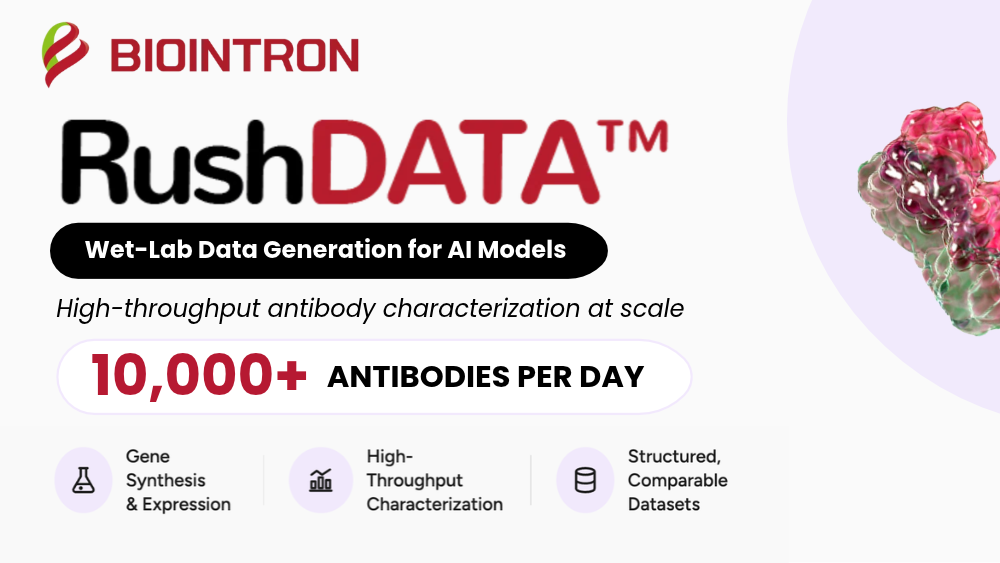

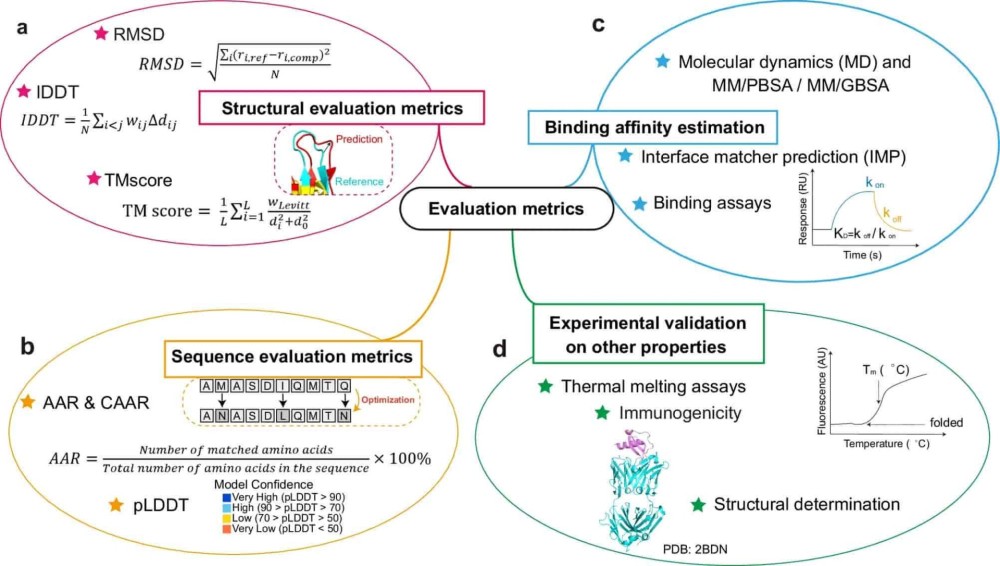




As AI models become more involved in antibody discovery and design, the need for reliable experimental data is growing. Turning predicted sequences into structured, comparable assay results is an important step towards connecting computational predictions with laboratory evidence.Antibody design is
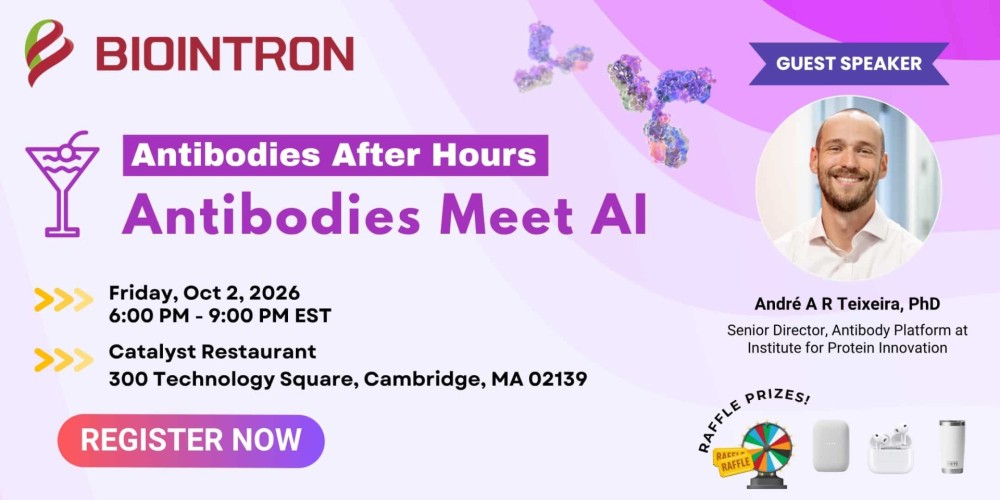
Recap of Antibodies After Hours Boston 2026: IPI's DELPHI developability prediction, CDR H3 polyreactivity insights, and Biointron's RushDATA™ wet-lab platform.
Key trends from the 17th World Bispecific Summit 2026 in Boston: AI-guided design, CD2/CD28 T-cell engagers, conditional antibodies, multispecific ADCs.
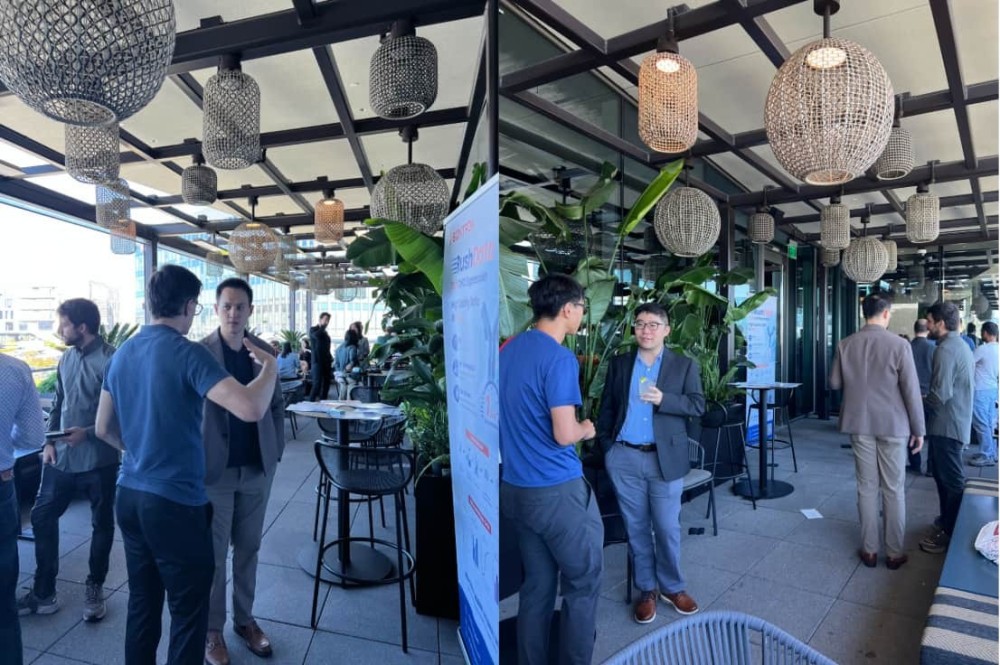
Biointron’s Antibodies After Hours: From Algorithms to Antibodies was held at The Hangar in South San Francisco, on Friday, September 4, 2026. “Antibodies After Hours” is a networking reception series from Biointron held in biotech hubs across the United States, with events previously hosted in S
Discover how high-throughput wet-lab validation connects AI-designed antibody sequences to experimental data, enabling faster screening and model refinement.
Understand the hybridoma generation process for monoclonal antibody production, including immunisation, cell fusion, screening, and clone selection.
Learn how AI antibody discovery connects computational design with antibody expression, binding assays, and experimental feedback for candidate selection
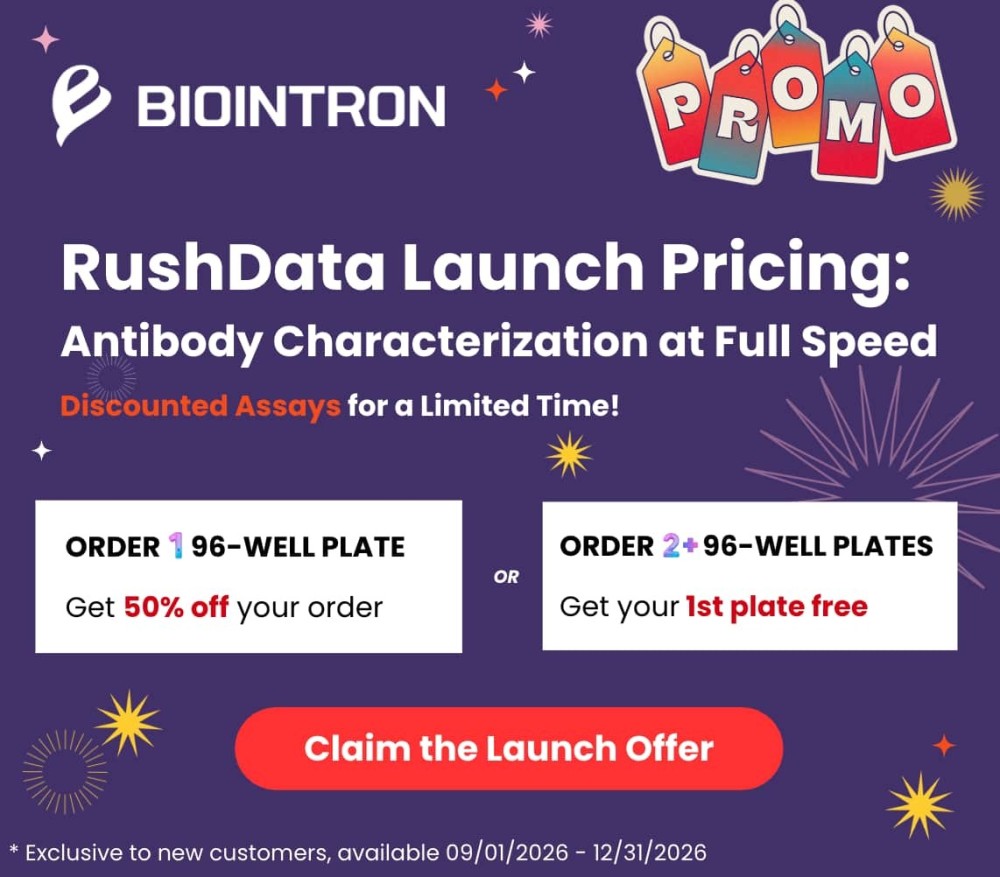
Explore Biointron's RushData launch offers for high-throughput antibody characterization. Eligible new-customer projects qualify through December 31, 2026
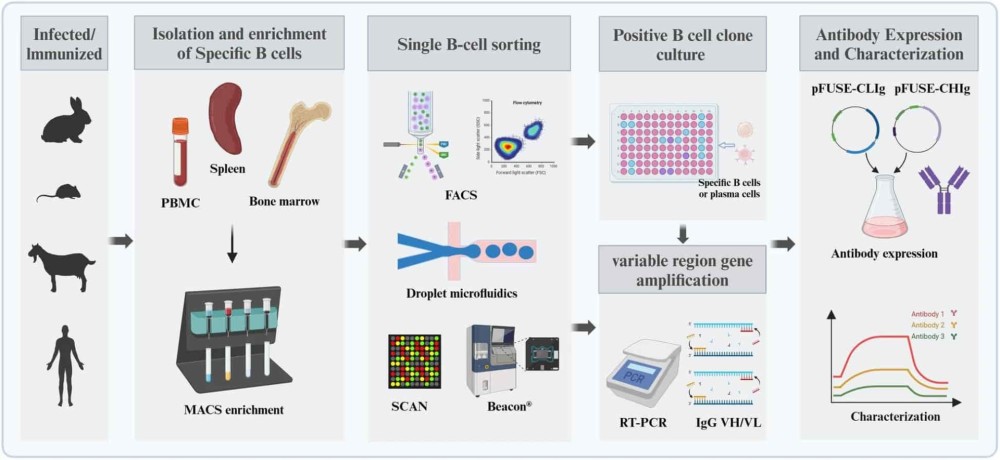
Learn how direct antigen labeling supports single B cell antibody screening, including probe design, background controls, and validation of binding signals.
Review August 2026 antibody biotech deals, including acquisitions, licensing, ADC partnerships, financing, and AI-driven discovery collaborations.
Explore single-cell droplet antibody screening, from cell isolation and fluorescence detection to sorting, sequence recovery, and recombinant validation.
Learn how to scale antibody validation to thousands of candidates with coordinated expression, binding assays, developability profiling, and data delivery.